
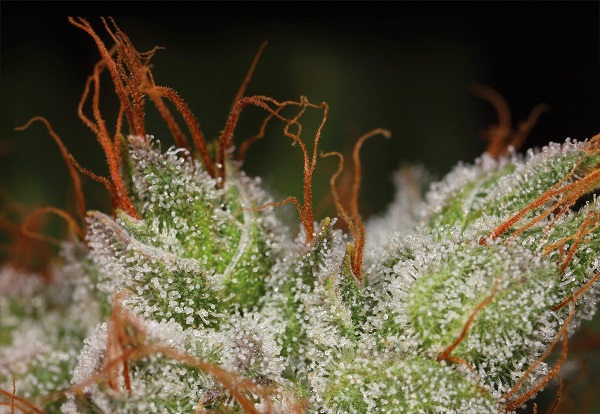

THC, TetraHydroCannabinol Formula: C21H30O2
Molecular Mass: 314.2246g/mol
Decarboxylation Point: 94-145 °C (200-293 °F)
Boiling Point: 157 °C (315 °F)
LD50 (Lethal Dose): “LD50 could not be determined in either rhesus monkeys or dogs as single oral doses of up to 9000 mg/kg of either delta-8- or delta-9-THC in dogs or monkeys were non-lethal.” (Compare to Nicotine: for rats – 50 mg/kg, for humans – 0.5-1 mg/kg)
While Δ9-THC is the most common cannabinoid in most cured cannsbis sold in stores, it is not the only THC in cannabis; it is joined by THCa, THCv, and Δ8-THC, as well as a slew of other cannabinoids, including CBD and CBN. Δ9-THC is the primary psychoactive compound that has been identified in the cannabis plant, though other trace cannabinoids are psychoactive, and others, like CBD, modulate how THC effects the body. THCv and CBN have both been shown to be psychoactive, while THCa is non-psychoactive (like CBD).
Δ9-THC is the cannabinoid responsible for the famed munchies that cannabis users speak of. By an ironic twist of fate, THCv, a chemical relative to THC, is being researched as an appetite suppressant. THC is the result of THCa decarboxylation, as THCa loses carbon molecules it becomes THC and becomes psychoactive. Eventually this same chemical process will cause the THC to break down further into CBN, retaining some of its psychoactive qualities but losing much of its medicinal value.
 Therapeutic Uses
Analgesic – Relieves pain.
Anti-Emetic – Reduces vomiting and nausea.
Anti-Proliferative – Inhibits cancer cell growth.
Antioxidant – Prevents the damage of oxidation to other molecules in the body.
Antispasmodic – Suppresses muscle spasms.
Anxiolitic – While not fully recognized as an anxiolitic compound THC does seem to assist in the anxiety associated with PTSD.
Appetite Stimulant – Δ9-THC is the only cannabinoid identified that is an appetite stimulant, giving people the stereotypical “munchies” many users describe.
Euphoriant – Produces feelings of euphoria, promotes happiness and relaxation.
Neuroprotective – Slows damage to the nervous system and brain.
Currently Being Studied For
Anorexia Nervosa: THC has shown great promise in reversing the weight loss associated with anorexia in studies on mice as well as humans. Even the synthetic cannabinoids dronabinol and marinol have been demonstrated to help with weight loss. While THC does stimulate one’s appetite, a double-blind placebo controlled study found that these effects were not strong enough to make THC a potential treatment for cachexia or anorexia.
Cancer: THC was the first cannabinoid discovered that helped combat cancer, and since then it has been shown to halt the growth of tumors, and in some cases shrink them, through various methods not yet fully understood. In one recent case study, an infant suffering from a brain tumor experienced a 90% reduction in tumor size over a year of twice a day use of hemp oil. Veteran cancer researcher Donald Tashkin, in the largest controlled study of its kind, found that daily smoking of THC-rich cannabis resulted in lower instances of cancer than in the general population of nonsmokers! Think about it; all smoking causes cancer by creation of benzopyrene, but despite that THC is a strong enough anti-proliferative to prevent more cancer than the smoking causes.
Fun Fact: Burning ANY organic matter creates benzopyrene. This means that barbeque, toast, and even grilled vegetables can give you cancer, but cannabis will not even if you burn it.
Chronic Pain: THC has been shown to have great prospect in treating chronic pain because it seems to change “the way the nerves function.” THC also has been studied heavily for its use in treating neuropathic pain, including the pain associated with HIV and cancer. Recent studies seem to agree that THC changes how we feel pain and makes it more bearable. It is not a pain killer in the sense that it reduces the amount of pain felt, instead it seems to raise an individual’s pain tolerance by distracting them from their pain. A 2015 study on neuropathy in diabetic patients found that THC “demonstrated a dose-dependent reduction in diabetic peripheral neuropathy pain.”
Glaucoma: Robert Randall, the first medical cannabis patient in American history, and the man responsible for the passage of the federal medical cannabis program back in the 70’s, Compassionate Investigative New Drug Program, was using THC-rich cannabis to treat the intraocular pressure caused by his glaucoma until the day he died in 2001. A year after Randall died, a study in Pharmacology and Therapeutics was the first to find cannabinoid receptors in the eyes, giving some hints to THC’s effectiveness on glaucoma. Then in 2004, a study in the British Journal of Ophthalmology vindicated years of personal anecdotes and found that THC does reduce intraocular pressure, but the mechanism of action is still not fully understood. While most testing on cannabis use focus on smoking, a 2006 study on cannabis use and glaucoma looked at sublingual cannabis use. That study found that 5mg of THC administered sublingually reduced eye pressure without many side effects, the same study found that CBD either did nothing or worsened the eye pressure.
HIV/AIDS: Aside from assisting with the pain and nausea that often are associated with HIV/AIDS, THC directly fights the virus in unique ways that have only recently been identified. A 2012 study shows THC assisting in HIV treatment by its activation of CB2 receptors and CD4 receptors. Cannabis affects our body by interacting with our endocannabinoid system, the CB2 and CD4 receptors are a part of that system. A study from earlier this year expands on the role of THC in combating HIV through its activation of CB2 receptors.
Post Traumatic Stress Disorder: Recent research has shown THC to be a powerful treatment for Post Traumatic Stress Disorder, possibly due to it’s ability to help people forget. This forgetting can include forgetting about trauma that should be let go of, so the individual can heal and move forward.

THC is a plant version of the endo-cannabinoid Anandamide, which has also been shown to be crucial in treating PTSD. Now, a host of scientists, including the award-winning researcher Sue Sisley, are conducting research into THC’s ability to help treat PTSD. Dr. Sisley has gained much attention after Dr. Sanjay Gupta covered her PTSD research in his CNN special, Weed III.
Research by Dr. George Greer in New Mexico has shown that THC-rich cannabis can reduce symptoms of PTSD by 75% on average. A 2011 study from the University of Halfa demonstrated that marijuana, notably THC, can help mitigate the onset of PTSD if taken after a traumatic event.
Gastrointestinal Inflammation: THC lowers the incidence of blockages and other gastrointestinal inflammation associated with use of NSAID anti-inflammatory drugs. THC “protects against diclofenac-induced gastric inflammatory tissue damage at doses insufficient to cause common cannabinoid side effects.” A recent survey of Irritable Bowel Disorder sufferers found that 1/6 use THC-rich cannabis to treat the inflammation.
Cannabinoid Profiles Series
2. A Crash Course in THC [this post]
[…] THC is probably the most researched cannabinoid. It is known for inducing the ‘high’ associated with cannabis consumption, and is effective in treating a number of conditions. THC can produce strong feelings of euphoria and overall well-being. […]
[…] is used, of course, to make beer, cannabis to make THC-centric medical and adult use marijuana and hemp – also in the cannabis genus – to make tens of […]
[…] plant-derived cannabidiol (CBD) so great is the many ways you can use it. It has many of the same therapeutic benefits as THC, but without the possibly awkward feeling of being […]
[…] plant-derived cannabidiol (CBD) so great is the many ways you can use it. It has many of the same therapeutic benefits as THC, but without the possibly awkward feeling of being […]
[…] Much greater THC than CBD and other cannabinoids, this leads to the “head high” many users […]
[…] Medical Cannabis, by Shoppers, will know exactly what is in their product: how many milligrams of THC and cannabidiol (CBD) are being consumed. And, if it works for them, they can rely on the […]
[…] większy poziom THC niż CBD i innych kannabinoidów. Produkuje duże ilości terpenów tj. a-terpinolene, […]
[…] as long as the delta-9 tetrahydrocannabinol (THC) content is below 0.3 percent, that plant is legally hemp and can be sold as hemp, which leaves over […]
[…] the packaging is well thought out, which is why they used brown glass to block UV light which can decarboxylate your cannabinoids and potentially ruin the product (unless you want your THC to become […]
[…] creates the high? Cannabinoids, such as tetrahydrocannabinol (THC) and cannabidiol (CBD), the active components of marijuana. THC is the primary psychoactive […]
My Friend’s Stage IV breast cancer and MS has just been cured with the high Quality CBD oil gotten from Drdonald Healthcare. Cannabis oil is such a great medication.
To hell with the government and their insane policy, Dr Donald have a medication that is hundred percent assured to cure cancer and you don’t need to spend so much money anymore on chemo, radiation or surgeries that wouldn’t just work.
Cannabis oil is full of CBD and cannaboids which are healing and repairing components..they help immune system as well as pain..THC works in the blood stream helps kill cancer cells and stunts growth of tumors. Chemo is basically a poison meant to kill Cancer. Unfortunately it kills healthy cells too.
Where to purchase, contact via Email > drdonaldhealthcare@gmail.com
My Friend,s Family is now a brand new one, so stop your worries and go get your medication and set the family free of the deadly disease that hold no respect to family harmony. This also works on seizures, chronic pains, Liver Diseases e.t.c
Make your health a better one by using CBD oil in your everyday life.
IMPORTANT NOTICE: NEW RESEARCH BY RICK SIMPSON, HAS JUST PROVEN THAT THC CURES HIV.
contact Dr Donald for all type of cancer Cure. Email:> drdonaldhealthcare@gmail.com
thanks to DR DONALD.
jcmurrayii The anti-epileptic properties of cannabis are the result of numerous compounds working in unison in a process known as The Entourage Effect. Using an entourage of various cannabinoids will always be more effective than using a single molecule/compound to treat your condition; this is why whole-plant cannabis works better than Sativex or Epidiolex. Charlotte’s Web is just one of numerous CBD-rich strains on the market.
Check out some of my previous posts for more information on it.
https://theleafonline.us/c/business/2014/06/charlatans-web-cbd-debacle/
https://theleafonline.us/c/science/2014/07/cannabinoid-profile-crash-course-cbg/
While not specifically anti-epileptic, Myrcene weakens the blood-brain barrier improving the effectiveness of THC/CBD/other drugs. https://theleafonline.us/c/science/2014/09/terpene-profile-myrcene/
I thought Charlotte’s Web (also Hippie’s Disappointment)…was a low THC/high CBD strain, and that the antiepileptic properties came from the CBD concentration?
Also an anticonvulsant, which cannabis also treats and has gained mainstream fame for a strain being used to treat pediatric epilepsy, named Charlotte’s Web.